Discounts for new customers until next week!
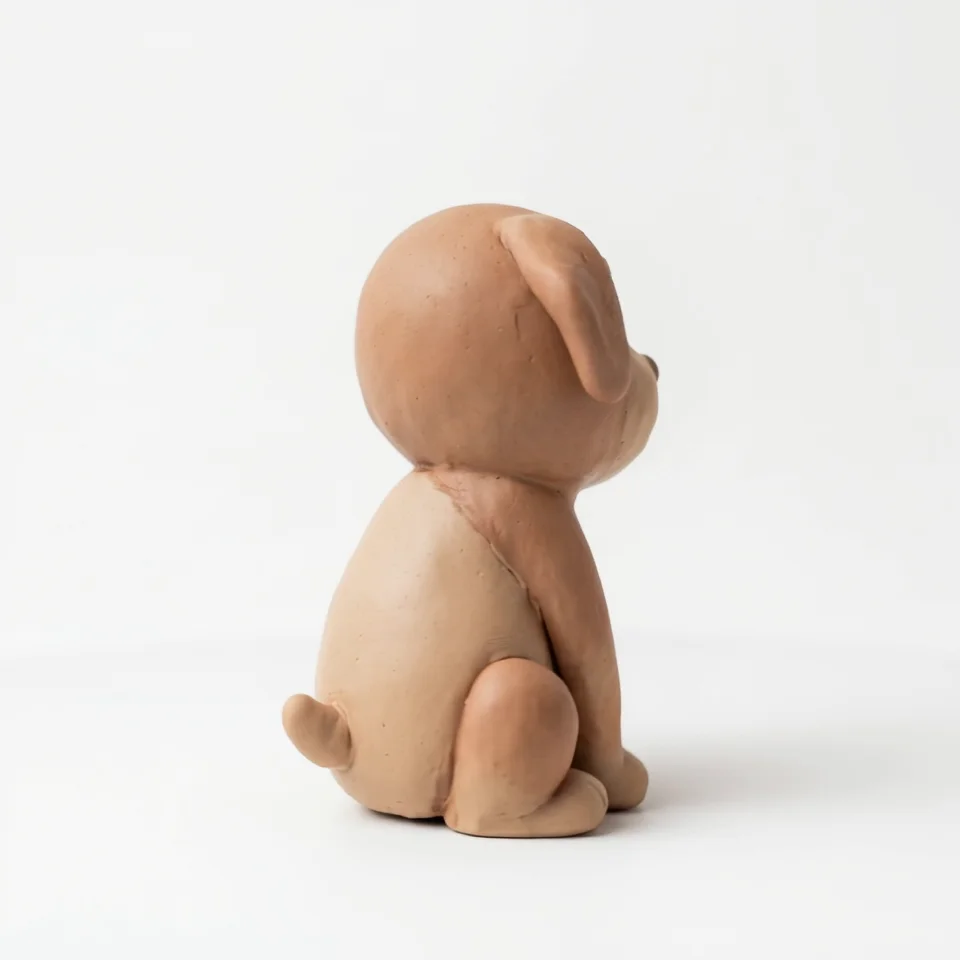
Bean's First 30 Days — A Story About Patience
Bean didn't know where to sit. We let him find his own corner — at his own pace. Some dogs need 7 days. Some need 30. Bean took the full month. Here's what we learned.
separation anxiety
separation anxiety
Brand Story
Brand Story
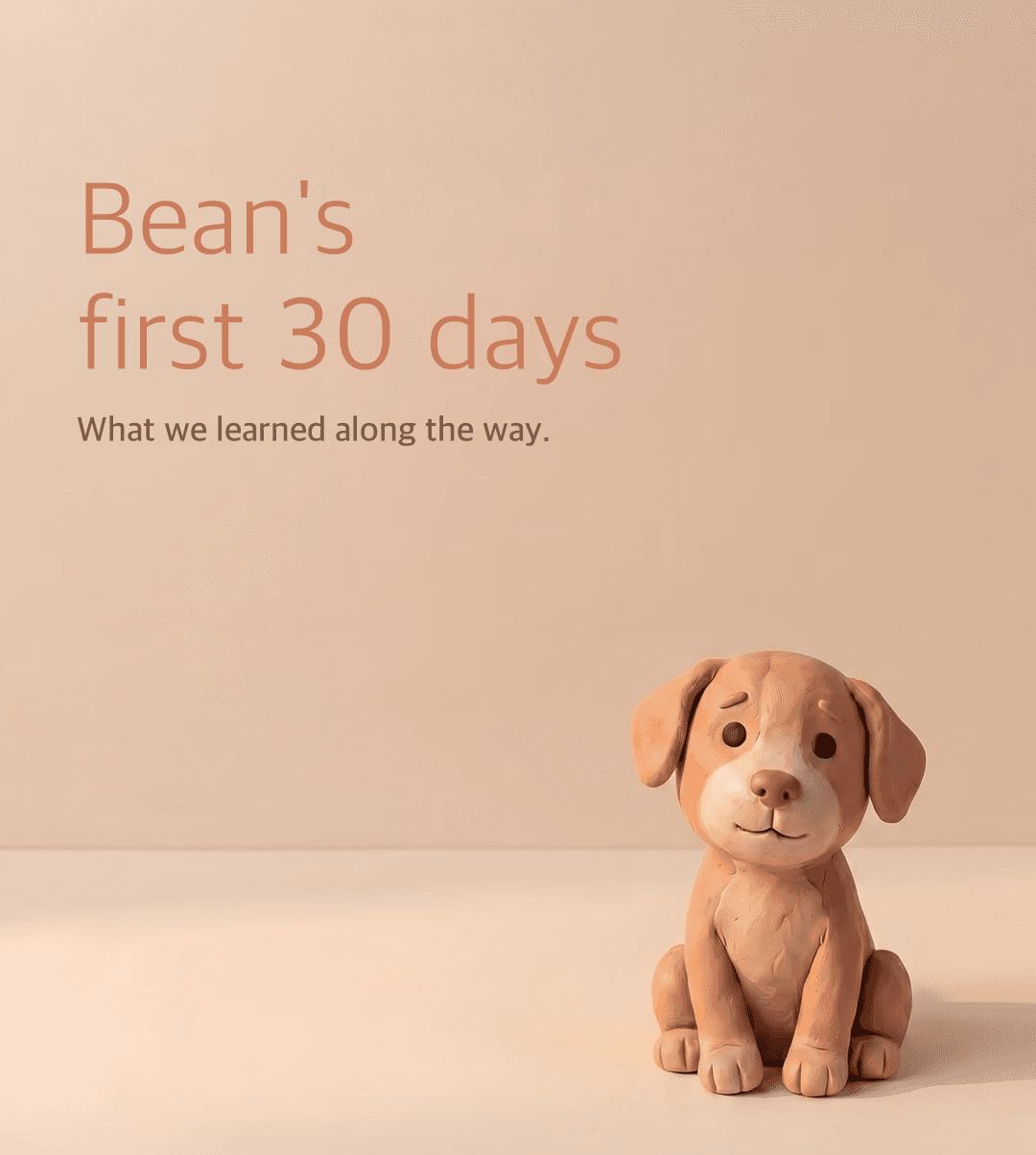
Bean's First 30 Days — A Story About Patience
Day 1: Bean didn't know where to sit.
We had laid out three options for him — a corner of the living room near the window, a spot by the couch, and a small mat near my desk. Most dogs, you put them down somewhere new, they find a place. They sniff the corner, they circle, they lie down.
Bean stood in the middle of the room. For a long time.
Then he sat down exactly where he was — middle of the floor, no wall behind him, no soft surface under him. Just exactly in the center of the room.
That was the first thing I learned about anxious dogs. The "perfect" spot you've prepared for them isn't always the spot they choose. You don't get to pick their safe corner. They do.
He has it, too. And he's choosing.
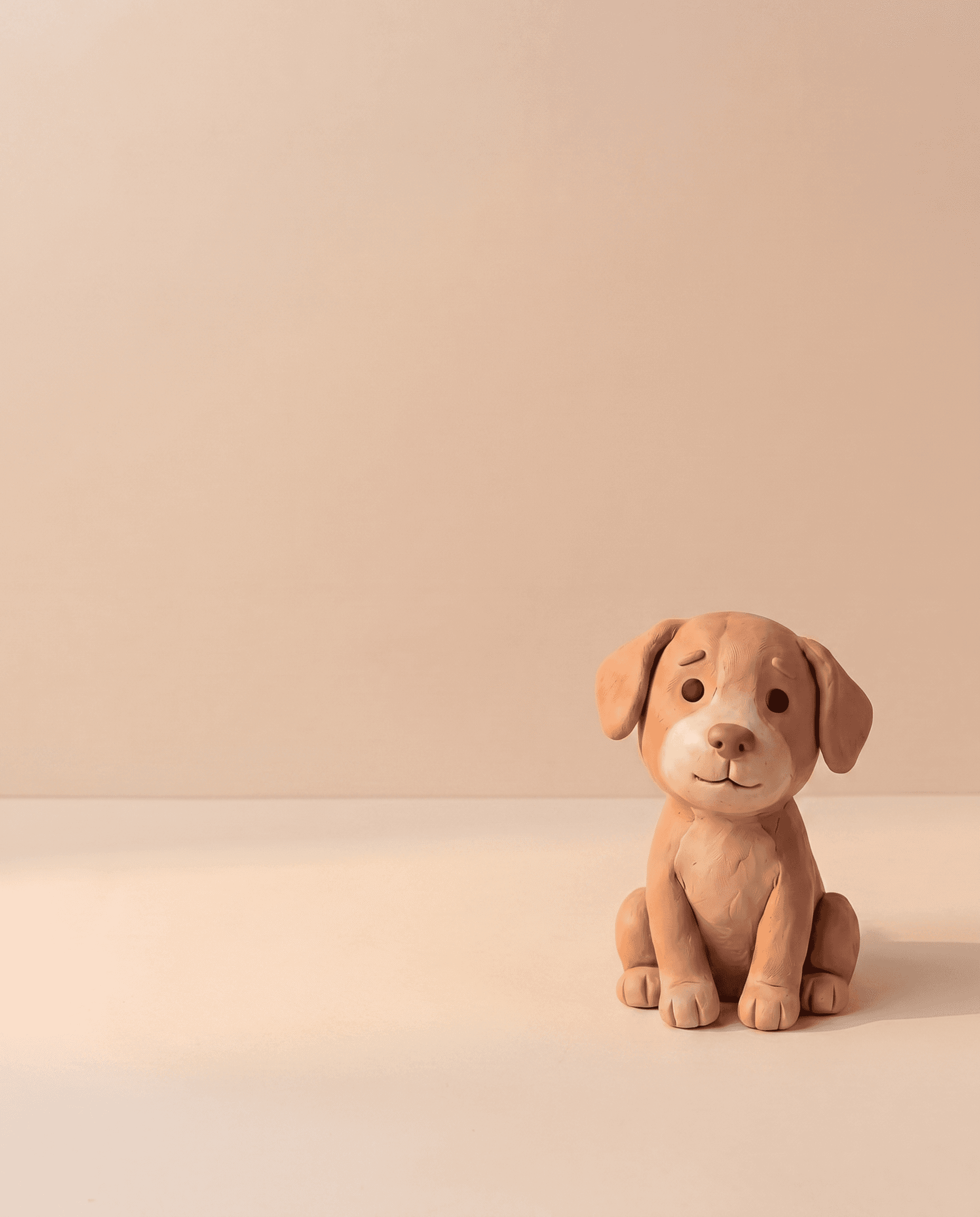
Day 1. Middle of the room. No wall behind him.
Days 1–6: The hardest part
The first week with Bean was small accidents and long silences.
Bathroom inside, twice. Three nights of pacing at 3 a.m. He didn't bark. That somehow made it worse — like he was holding everything in, trying to be a "good dog" before he even understood what we wanted from him.
I tried everything I'd read about. Long walks before bedtime (he wouldn't sleep). Calming chews from PetSmart (didn't help). Slow blinks and soft talking (mild improvement). A Trazodone trial at the vet's suggestion (we paused after 2 doses — he became sedated, not calm).
Day 5, I stopped trying to make him settle. I let him just be in the room with me. I worked. I made tea. I read. I didn't ask anything of him.
By the end of Day 6, he was lying within 2 feet of my chair. Not touching me. Not in his designated bed. Just close enough to feel safe.
Lesson 1: Anxious dogs need to choose proximity, not be forced into it.
Days 7–14: Small wins
Day 7, I left for groceries. 22 minutes. I set up a camera.
When I got home and watched the footage: Bean paced for the first 6 minutes. Then he sat down in the spot where I usually sat to read. He stayed there until I came home. He didn't whine. He just waited.
The destruction we'd been told to expect — chewed door frames, scratched furniture — never happened with Bean. Some anxious dogs externalize. Some internalize. Bean was the second kind.
If your dog is "well-behaved" but you suspect something's off — please trust that suspicion. The quiet ones are sometimes the most stressed. They're just not telling you in a way that's easy to see.
By Day 10, I noticed he'd started moving to the same spot every morning. Window corner, behind the curtain. He could see the door from there. He could see me from there. He could see outside.
He'd picked his corner. I hadn't done anything. He just decided.
Day 10. He'd picked his corner. I hadn't done anything.
Days 14–21: A routine, quietly
Once Bean had his corner, the rest got easier.
Morning by the window. Midday nap in the corner. Evening at my feet.
This is when I designed the bed that became the Calming Donut Bed. I needed something for Bean's chosen corner that would hold him — that raised rim he could rest his head on, fur deep enough to feel like a den, sized for a 15-lb dog, not a scaled-down version of a large-dog bed.
I prototyped three versions. He used the third one. The first two, he sniffed and walked away from. (Anxious dogs are also picky dogs. We don't get to assume.)
What I learned in this stretch:
Rituals matter more than schedules. Bean didn't care what time I left, but he cared how. Same kiss on the head. Same phrase ("back soon, Bean"). Same departure path through the kitchen.
The bed didn't fix anything. It just held him. The fix was the consistency. The bed gave him a place to land.
Silence isn't healing on its own. I started leaving very soft music on when I left. He settled 3 minutes faster on those days. (Pet Behavior Clinic studies back this up — soft music, especially classical or specifically composed "Through a Dog's Ear" tracks, reduce cortisol modestly.)
Days 21–30: What changed
Day 25, I came home from a 4-hour absence. Bean was in the bed. Not next to it. Not on the floor near it. In it.
That was the first time.
Day 28, he didn't pace when I picked up my keys. He looked up, watched, and went back to the bed.
Day 30, I left for 6 hours. Came home. The camera footage showed Bean sleeping for 5 hours straight, with a 12-minute waking period at the 3-hour mark — pacing, then back to sleep.
He wasn't "cured." There's no cure for separation anxiety in 30 days. There's no cure in 6 months, sometimes. What changed wasn't Bean. What changed was that he had a corner.
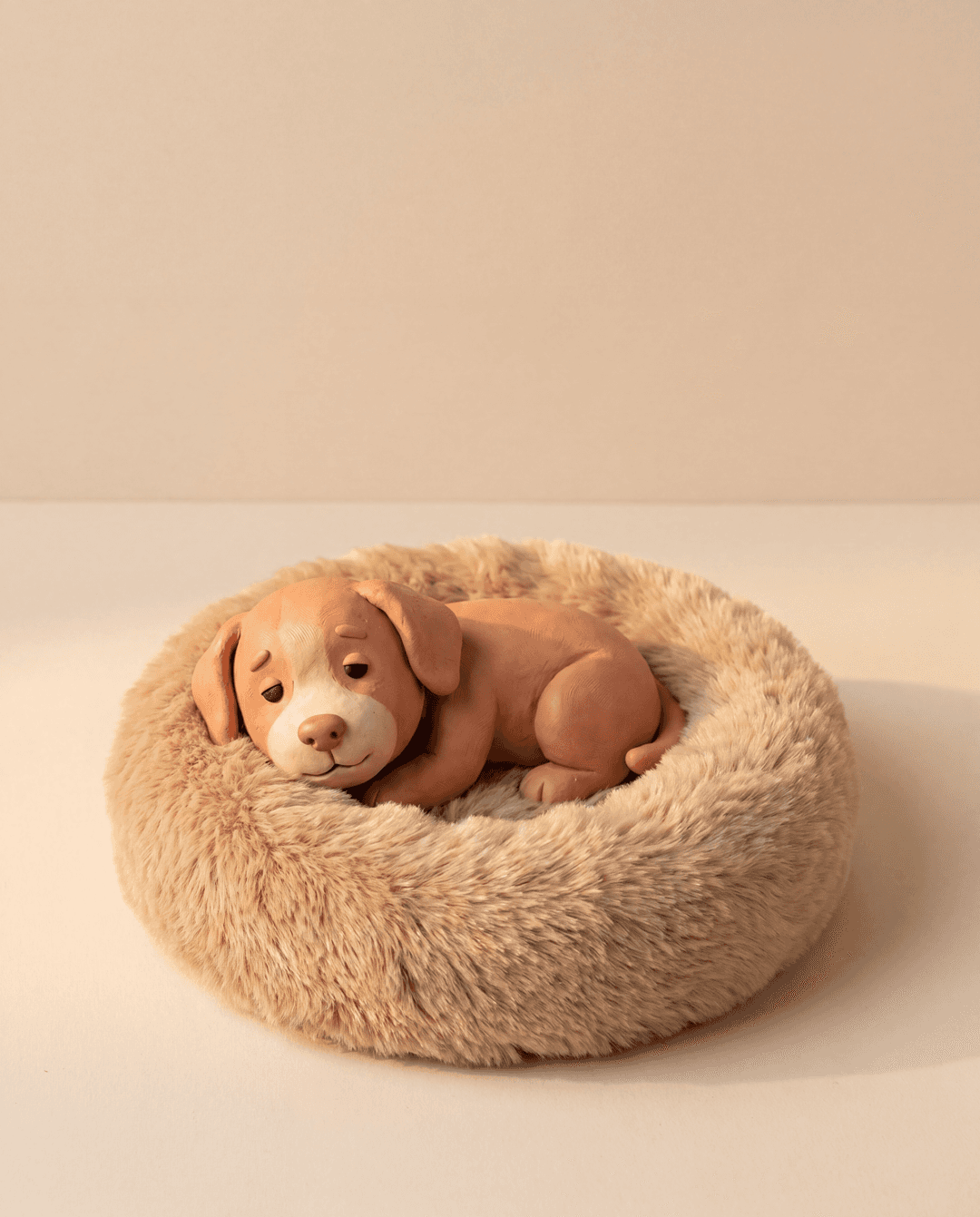
Day 30. He chose to be in the bed.
What we learned (and what we want you to know)
If your dog is in the adjustment phase — whether it's day 3 or day 50 — here's what helped us:
1. You don't pick their safe corner. They do.
Watch where your dog ends up when they're trying to settle. That's the spot. Put the bed there, not where it "looks right" in your living room.
2. The bed is a tool, not a magic.
Bean's bed didn't heal him. It gave him a consistent place to land. Pair it with ritual departures, ritual returns, ritual quiet hours.
3. Internalizing dogs are real.
If your dog seems "fine" but you notice they don't fully relax, they pant in their sleep, they're "good" in a too-careful way — please trust that. The quiet ones often need the most patience.
4. 30 days is a starting line, not a finish line.
Most behavioral research shows real change takes 60–90 days, with deep work continuing for 6–12 months. Bean is on Day 90 now. He's still learning.
5. Don't compare timelines.
Some dogs settle in 7 days. Some take 90. Some take a year. Bean took 30 days to find his corner. That doesn't mean your dog will, or should. Their nervous system has its own clock.
For your dog
If your dog is in their first 30 days — new home, post-move, post-surgery, post-pandemic-routine-change — the most loving thing you can do is be patient.
Set up the camera. Watch what they do. Don't intervene unless they're in danger. Let them choose where they settle.
When they pick their corner, build them a safe one. A real bed. The right size. Soft enough to feel like a den.
If you want a starting point, the Calming Donut Bed is what we made for Bean. Designed from scratch for dogs under 20 lb (not a scaled-down version of a large-dog bed). Long fluffy faux fur. Raised 8-inch rim for head support. Washable inner cushion. 30-night promise: if it's not the right corner for your dog, keep it — we'll refund. Beds are expensive to ship back, and we want you to find your dog's actual corner, not return the wrong one.
Bean is doing better now. He still pants on the first 20 minutes of a long absence. He still has hard days. But he has a corner.
That's enough. For now.
He has it, too. — Nuvorie
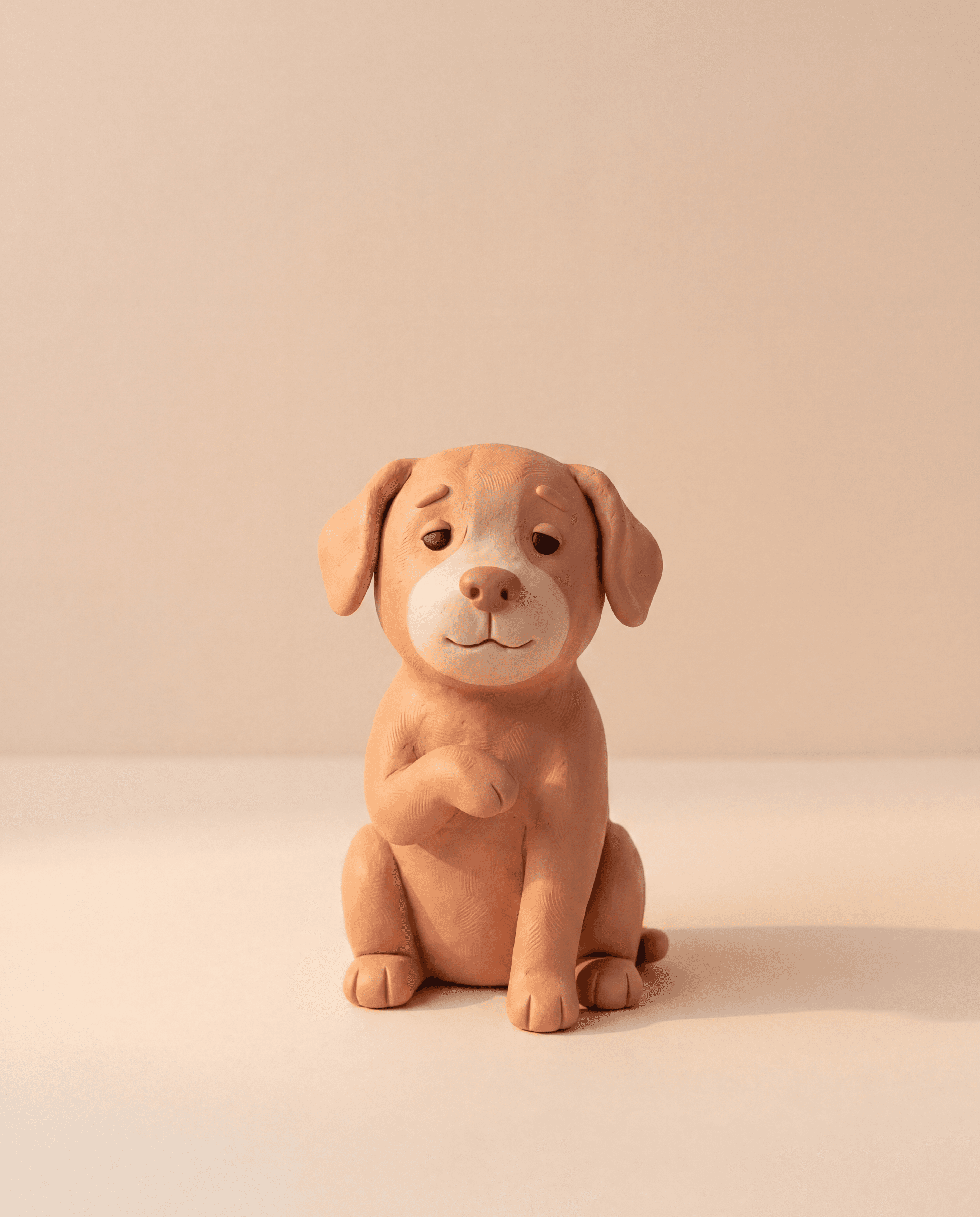
Bean, present day. Still learning. Still here.
Every dog's timeline is different. This is one story, not a promise. If your dog's behavior is severe or self-injurious, please consult a veterinary behaviorist.
Bean's First 30 Days — A Story About Patience
Day 1: Bean didn't know where to sit.
We had laid out three options for him — a corner of the living room near the window, a spot by the couch, and a small mat near my desk. Most dogs, you put them down somewhere new, they find a place. They sniff the corner, they circle, they lie down.
Bean stood in the middle of the room. For a long time.
Then he sat down exactly where he was — middle of the floor, no wall behind him, no soft surface under him. Just exactly in the center of the room.
That was the first thing I learned about anxious dogs. The "perfect" spot you've prepared for them isn't always the spot they choose. You don't get to pick their safe corner. They do.
He has it, too. And he's choosing.
Day 1. Middle of the room. No wall behind him.
Days 1–6: The hardest part
The first week with Bean was small accidents and long silences.
Bathroom inside, twice. Three nights of pacing at 3 a.m. He didn't bark. That somehow made it worse — like he was holding everything in, trying to be a "good dog" before he even understood what we wanted from him.
I tried everything I'd read about. Long walks before bedtime (he wouldn't sleep). Calming chews from PetSmart (didn't help). Slow blinks and soft talking (mild improvement). A Trazodone trial at the vet's suggestion (we paused after 2 doses — he became sedated, not calm).
Day 5, I stopped trying to make him settle. I let him just be in the room with me. I worked. I made tea. I read. I didn't ask anything of him.
By the end of Day 6, he was lying within 2 feet of my chair. Not touching me. Not in his designated bed. Just close enough to feel safe.
Lesson 1: Anxious dogs need to choose proximity, not be forced into it.
Days 7–14: Small wins
Day 7, I left for groceries. 22 minutes. I set up a camera.
When I got home and watched the footage: Bean paced for the first 6 minutes. Then he sat down in the spot where I usually sat to read. He stayed there until I came home. He didn't whine. He just waited.
The destruction we'd been told to expect — chewed door frames, scratched furniture — never happened with Bean. Some anxious dogs externalize. Some internalize. Bean was the second kind.
If your dog is "well-behaved" but you suspect something's off — please trust that suspicion. The quiet ones are sometimes the most stressed. They're just not telling you in a way that's easy to see.
By Day 10, I noticed he'd started moving to the same spot every morning. Window corner, behind the curtain. He could see the door from there. He could see me from there. He could see outside.
He'd picked his corner. I hadn't done anything. He just decided.
Day 10. He'd picked his corner. I hadn't done anything.
Days 14–21: A routine, quietly
Once Bean had his corner, the rest got easier.
Morning by the window. Midday nap in the corner. Evening at my feet.
This is when I designed the bed that became the Calming Donut Bed. I needed something for Bean's chosen corner that would hold him — that raised rim he could rest his head on, fur deep enough to feel like a den, sized for a 15-lb dog, not a scaled-down version of a large-dog bed.
I prototyped three versions. He used the third one. The first two, he sniffed and walked away from. (Anxious dogs are also picky dogs. We don't get to assume.)
What I learned in this stretch:
Rituals matter more than schedules. Bean didn't care what time I left, but he cared how. Same kiss on the head. Same phrase ("back soon, Bean"). Same departure path through the kitchen.
The bed didn't fix anything. It just held him. The fix was the consistency. The bed gave him a place to land.
Silence isn't healing on its own. I started leaving very soft music on when I left. He settled 3 minutes faster on those days. (Pet Behavior Clinic studies back this up — soft music, especially classical or specifically composed "Through a Dog's Ear" tracks, reduce cortisol modestly.)
Days 21–30: What changed
Day 25, I came home from a 4-hour absence. Bean was in the bed. Not next to it. Not on the floor near it. In it.
That was the first time.
Day 28, he didn't pace when I picked up my keys. He looked up, watched, and went back to the bed.
Day 30, I left for 6 hours. Came home. The camera footage showed Bean sleeping for 5 hours straight, with a 12-minute waking period at the 3-hour mark — pacing, then back to sleep.
He wasn't "cured." There's no cure for separation anxiety in 30 days. There's no cure in 6 months, sometimes. What changed wasn't Bean. What changed was that he had a corner.
Day 30. He chose to be in the bed.
What we learned (and what we want you to know)
If your dog is in the adjustment phase — whether it's day 3 or day 50 — here's what helped us:
1. You don't pick their safe corner. They do.
Watch where your dog ends up when they're trying to settle. That's the spot. Put the bed there, not where it "looks right" in your living room.
2. The bed is a tool, not a magic.
Bean's bed didn't heal him. It gave him a consistent place to land. Pair it with ritual departures, ritual returns, ritual quiet hours.
3. Internalizing dogs are real.
If your dog seems "fine" but you notice they don't fully relax, they pant in their sleep, they're "good" in a too-careful way — please trust that. The quiet ones often need the most patience.
4. 30 days is a starting line, not a finish line.
Most behavioral research shows real change takes 60–90 days, with deep work continuing for 6–12 months. Bean is on Day 90 now. He's still learning.
5. Don't compare timelines.
Some dogs settle in 7 days. Some take 90. Some take a year. Bean took 30 days to find his corner. That doesn't mean your dog will, or should. Their nervous system has its own clock.
For your dog
If your dog is in their first 30 days — new home, post-move, post-surgery, post-pandemic-routine-change — the most loving thing you can do is be patient.
Set up the camera. Watch what they do. Don't intervene unless they're in danger. Let them choose where they settle.
When they pick their corner, build them a safe one. A real bed. The right size. Soft enough to feel like a den.
If you want a starting point, the Calming Donut Bed is what we made for Bean. Designed from scratch for dogs under 20 lb (not a scaled-down version of a large-dog bed). Long fluffy faux fur. Raised 8-inch rim for head support. Washable inner cushion. 30-night promise: if it's not the right corner for your dog, keep it — we'll refund. Beds are expensive to ship back, and we want you to find your dog's actual corner, not return the wrong one.
Bean is doing better now. He still pants on the first 20 minutes of a long absence. He still has hard days. But he has a corner.
That's enough. For now.
He has it, too. — Nuvorie
Bean, present day. Still learning. Still here.
Every dog's timeline is different. This is one story, not a promise. If your dog's behavior is severe or self-injurious, please consult a veterinary behaviorist.

Mindfully sourced. Premium, pet-safe materials for true peace of mind.
Reliable shipping with full end-to-end tracking included.
Built for daily rituals. Durable gear that ages beautifully.
30-day stress-free returns. Your dog's comfort is our priority.
Quiet updates, for quiet dogs.
First looks, little stories, and updates from Bean. Unsubscribe anytime.
Thewiseshop · Owner Park KyeongMin · Business Registration No. 356-52-00858 · 117-35 Wolgye-ro, Gwangsan-gu, Gwangju, 62261, Republic of Korea · support@nuvorie.shop · Tel. 010-5332-2971 · © 2026 Nuvorie. All Rights Reserved
Mindfully sourced. Premium, pet-safe materials for true peace of mind.
Reliable shipping with full end-to-end tracking included.
Built for daily rituals. Durable gear that ages beautifully.
30-day stress-free returns. Your dog's comfort is our priority.
Quiet updates, for quiet dogs.
First looks, little stories, and updates from Bean. Unsubscribe anytime.
Thewiseshop · Owner Park KyeongMin · Business Registration No. 356-52-00858 · 117-35 Wolgye-ro, Gwangsan-gu, Gwangju, 62261, Republic of Korea · support@nuvorie.shop · Tel. 010-5332-2971 · © 2026 Nuvorie. All Rights Reserved