Discounts for new customers until next week!
5 Signs Your Small Dog Has Separation Anxiety
85.9% of dogs in the US show separation anxiety behaviors. Yours might be one of them. Here are the 5 signs we wish more people knew.
separation anxiety
separation anxiety
Main
Main
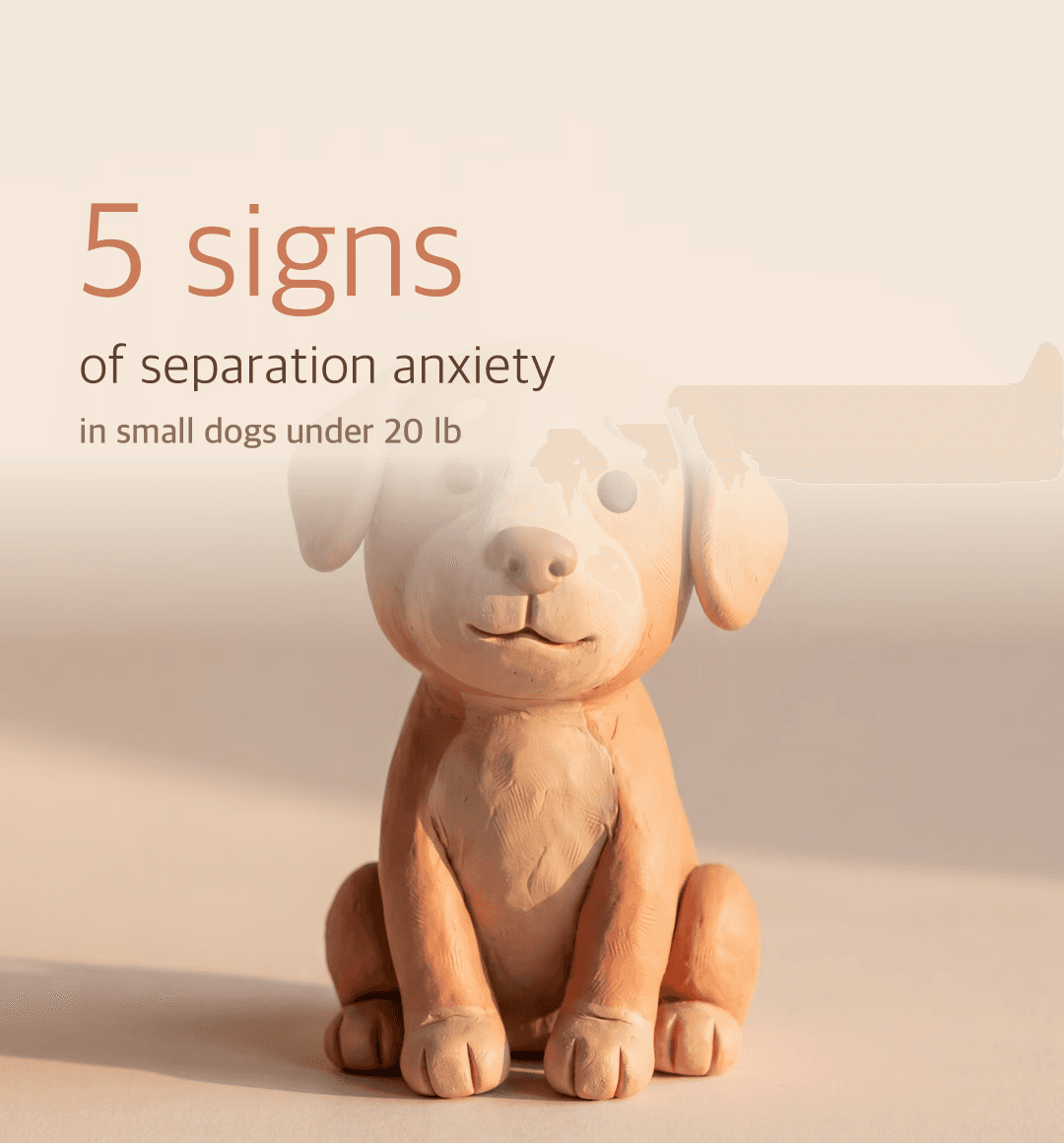
5 Signs Your Small Dog Has Separation Anxiety
85.9% of dogs in the US show separation anxiety behaviors.
That's not a marketing number. That's from the 2025 Dog Aging Project (n=43,517) — the largest longitudinal study on dog behavior in the country. Most of us assumed our dogs were "just being dramatic" when we leave for work. Turns out, most of us were wrong.
Bean — my clay puppy and the mascot of Nuvorie — was one of them. He didn't know I was coming back. He waited by the door.
If you suspect something similar with your dog, here are the 5 signs we wish more small-dog parents knew. None of them are diagnostic on their own. But together, they tell a story.
He has it, too. Probably.
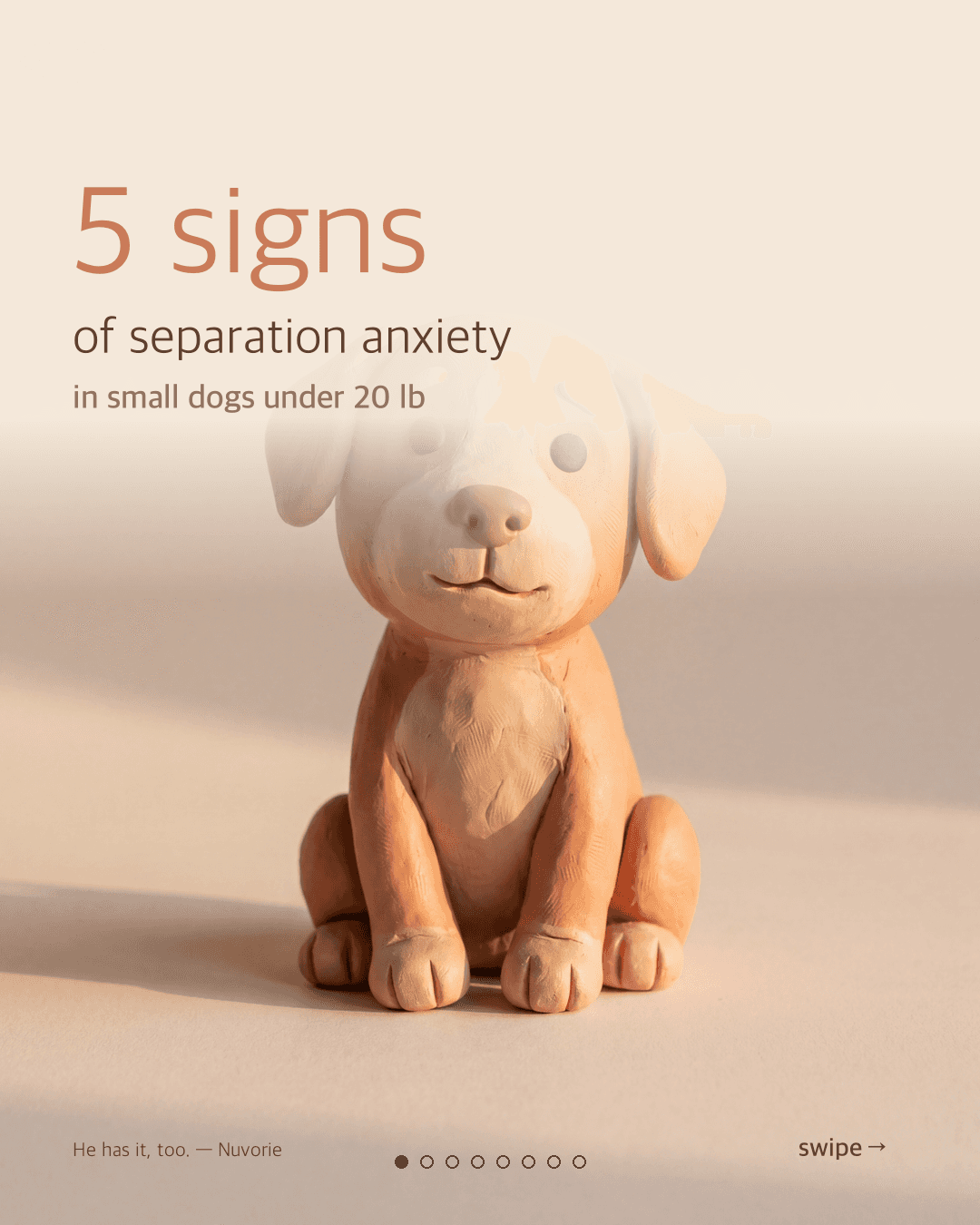
Bean, on a day when the coffee mug went in the sink.
Sign #1 — Behavior that starts before you leave
The first sign isn't barking. It's pacing.
If your dog starts pacing, panting, drooling, or "velcro-following" you in the 15–30 minutes before you leave — that's their cortisol already rising. They've learned the routine: keys, jacket, shoes. They know what comes next.
For Bean, it was the sound of my morning coffee mug being placed in the sink. That was the trigger. By the time I picked up my keys, he was already panting.
What to watch for:
Pacing in tight loops
Heavy breathing without exercise
Drooling without food nearby
Sudden refusal to eat treats
Sitting/standing right where you'll walk past
If you see this before you leave, the issue isn't being alone. It's the anticipation.
Sign #2 — Vocalization only when alone
Most dogs bark sometimes. The question is when.
If your dog only barks, howls, or whines when you're not home — and is quiet the rest of the time — that's a separation-specific signal. Neighbors might know before you do. Doorbell cameras and home cameras have changed how many of us discovered this in the past few years.
The vocalization usually peaks in the first 15–30 minutes after you leave. By minute 20, cortisol is at its highest. After that, some dogs settle. Some don't.
If you're not sure, set up a camera for one day. Watch what happens in those first 30 minutes. It's painful, but it's information.
Sign #3 — Destructive behavior in specific zones
Anxious dogs don't destroy randomly. They destroy what reminds them of you, or what blocks them from following you.
The most common targets:
Door frames and door handles (trying to follow)
Window sills (watching for your return)
Shoes, jackets, bags (your scent)
Couch corners and bedding (self-soothing through chewing)
If your dog only does this when alone, and only on these items — it's not "bad behavior." It's distress.
Important caveat: puppies under 18 months chew everything as a developmental phase. The pattern matters. If a 4-year-old dog suddenly starts chewing your door frame after months of being fine — that's separation anxiety, not "rediscovering chewing."
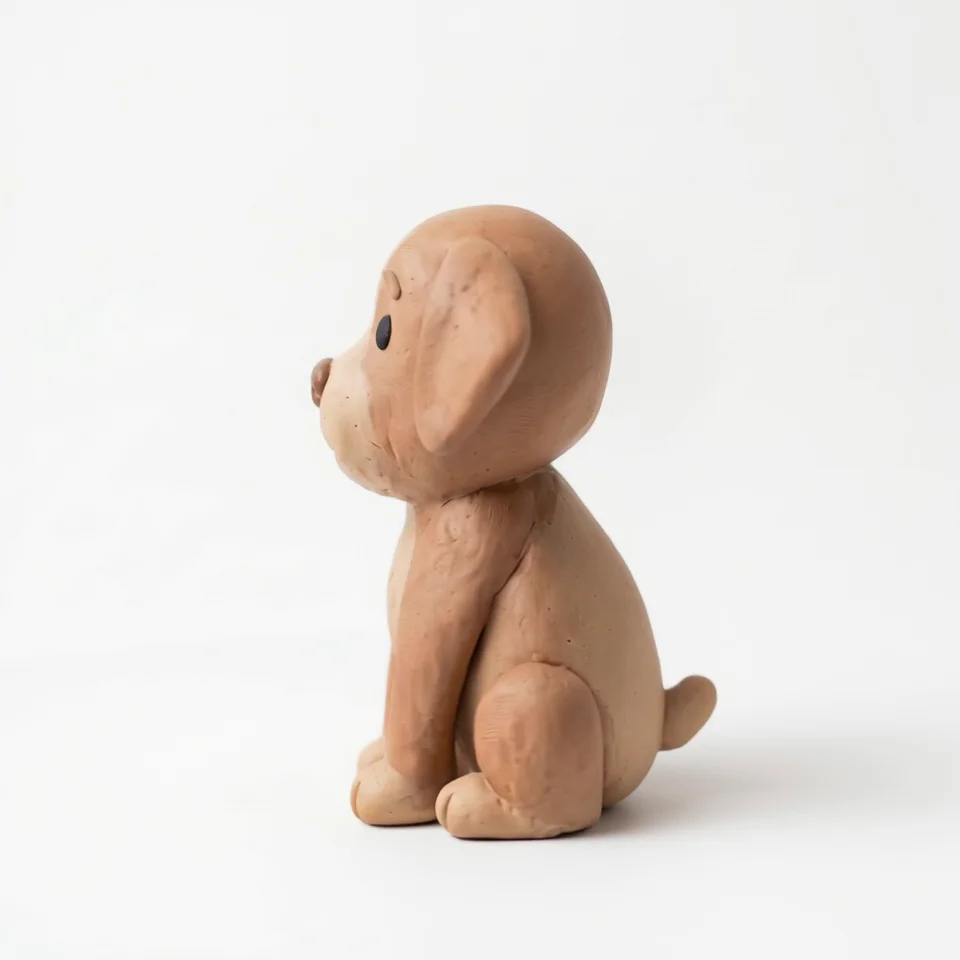
Anxious dogs don't always destroy. Some just watch.
Sign #4 — Bathroom accidents only when alone
A house-trained dog peeing or pooping inside only when alone is one of the clearest separation anxiety signs there is. It's not spite (dogs don't do spite). It's not forgetfulness. It's stress incontinence.
When cortisol stays high for hours, the body lets go. The dog feels terrible about it — you'll often see them avoid the spot when you come home, or act submissive.
If this is happening, please don't punish. The dog already knows. Punishment makes the next separation event worse, because now they're anxious about two things: you leaving, and what happens when you come back.
Sign #5 — The over-the-top greeting
When you come home, does your dog spin, jump, whine, and refuse to settle for 5+ minutes? That's not just joy.
That's relief. Big relief. The kind that only follows real distress.
A regulated dog greets you, wags, maybe brings a toy, then settles within 1–2 minutes. An anxious dog can't settle — they're discharging the cortisol that built up while you were gone.
If you also notice excessive licking of your hands or face during this greeting, or your dog won't leave your side for the next 30 minutes — that's the same pattern. They're checking that you're real, that you're staying.
Why small dogs feel it more
Small breeds are 3× more sensitive to separation-related stress than larger breeds (Brand et al., 2024, ScienceDirect).
The leading theories:
Smaller body size = faster cortisol clearance, but also faster cortisol spikes
Many small breeds were bred specifically for human companionship (lapdogs)
They're more easily startled, so the silence after you leave feels more sudden
Pandemic-era adopted small dogs (2020–2022) are now 4–6 years old and being asked to handle full-time office returns. The behaviorist data on this cohort is sobering: separation anxiety cases rose 700% in 2 years (DVM360, 2022).
If your dog is in this cohort, you're not alone. And neither are they.

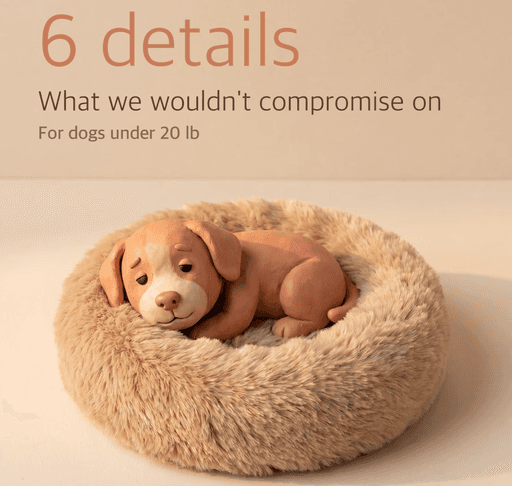
The Calming Donut Bed — Bean's safe corner. Designed for under 20 lb.
What to do next
If you saw your dog in 2–3 of these signs, here's the gentlest first step:
Set up one home camera for one day. Watch the first 30 minutes. The data will tell you what you're working with.
Don't punish anything. Whatever you find, it's not your dog being "bad." It's stress.
Get a self-check. We made a 12-question version Bean and I use to track his progress. DM "CHECK" on our Instagram @nuvorie.shop and we'll send it. No email needed.
Build a safe corner. A dedicated calming space — bed, mat, anything — that signals "this is where I rest." Bean took 30 days to learn his.
If you want a starting point, the Calming Donut Bed is what we made for Bean. Designed for dogs under 20 lb. Long fluffy faux fur, raised rim for head support, washable inner cushion. It's not magic — no bed is. But it's the safe corner Bean chose.
If your dog hasn't shown any of these signs, that's wonderful. If they've shown all of them, you're far from alone.
He has it, too. — Nuvorie
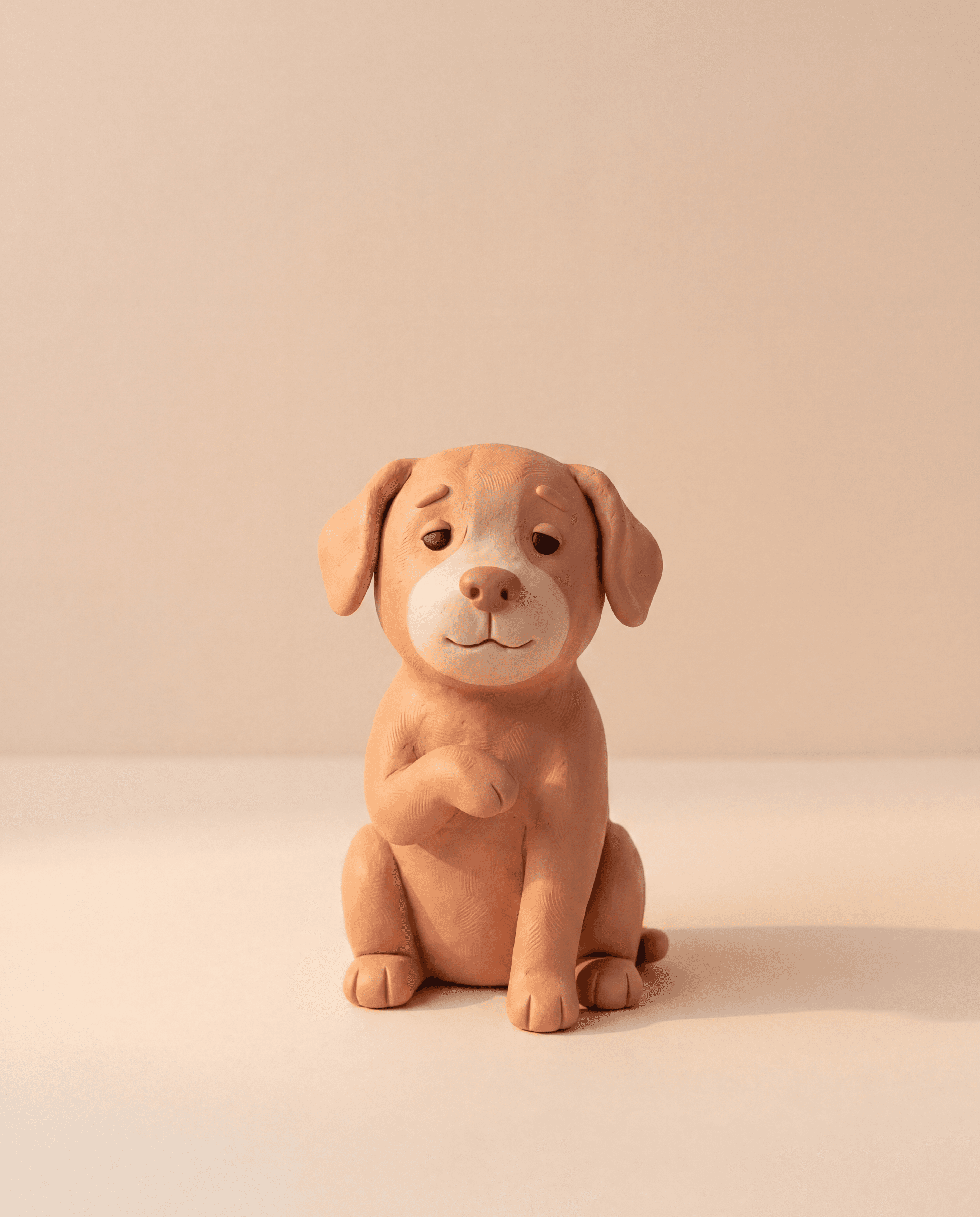
Bean checks in.
Sources: Dog Aging Project (2025, n=43,517) · ScienceDirect 2024 behavioral re-analysis · DVM360 (2022) · ASPCA · VCA Animal Hospitals
Educational only. Not a diagnosis. If your dog's behavior is severe, please consult a veterinary behaviorist.
5 Signs Your Small Dog Has Separation Anxiety
85.9% of dogs in the US show separation anxiety behaviors.
That's not a marketing number. That's from the 2025 Dog Aging Project (n=43,517) — the largest longitudinal study on dog behavior in the country. Most of us assumed our dogs were "just being dramatic" when we leave for work. Turns out, most of us were wrong.
Bean — my clay puppy and the mascot of Nuvorie — was one of them. He didn't know I was coming back. He waited by the door.
If you suspect something similar with your dog, here are the 5 signs we wish more small-dog parents knew. None of them are diagnostic on their own. But together, they tell a story.
He has it, too. Probably.
Bean, on a day when the coffee mug went in the sink.
Sign #1 — Behavior that starts before you leave
The first sign isn't barking. It's pacing.
If your dog starts pacing, panting, drooling, or "velcro-following" you in the 15–30 minutes before you leave — that's their cortisol already rising. They've learned the routine: keys, jacket, shoes. They know what comes next.
For Bean, it was the sound of my morning coffee mug being placed in the sink. That was the trigger. By the time I picked up my keys, he was already panting.
What to watch for:
Pacing in tight loops
Heavy breathing without exercise
Drooling without food nearby
Sudden refusal to eat treats
Sitting/standing right where you'll walk past
If you see this before you leave, the issue isn't being alone. It's the anticipation.
Sign #2 — Vocalization only when alone
Most dogs bark sometimes. The question is when.
If your dog only barks, howls, or whines when you're not home — and is quiet the rest of the time — that's a separation-specific signal. Neighbors might know before you do. Doorbell cameras and home cameras have changed how many of us discovered this in the past few years.
The vocalization usually peaks in the first 15–30 minutes after you leave. By minute 20, cortisol is at its highest. After that, some dogs settle. Some don't.
If you're not sure, set up a camera for one day. Watch what happens in those first 30 minutes. It's painful, but it's information.
Sign #3 — Destructive behavior in specific zones
Anxious dogs don't destroy randomly. They destroy what reminds them of you, or what blocks them from following you.
The most common targets:
Door frames and door handles (trying to follow)
Window sills (watching for your return)
Shoes, jackets, bags (your scent)
Couch corners and bedding (self-soothing through chewing)
If your dog only does this when alone, and only on these items — it's not "bad behavior." It's distress.
Important caveat: puppies under 18 months chew everything as a developmental phase. The pattern matters. If a 4-year-old dog suddenly starts chewing your door frame after months of being fine — that's separation anxiety, not "rediscovering chewing."
Anxious dogs don't always destroy. Some just watch.
Sign #4 — Bathroom accidents only when alone
A house-trained dog peeing or pooping inside only when alone is one of the clearest separation anxiety signs there is. It's not spite (dogs don't do spite). It's not forgetfulness. It's stress incontinence.
When cortisol stays high for hours, the body lets go. The dog feels terrible about it — you'll often see them avoid the spot when you come home, or act submissive.
If this is happening, please don't punish. The dog already knows. Punishment makes the next separation event worse, because now they're anxious about two things: you leaving, and what happens when you come back.
Sign #5 — The over-the-top greeting
When you come home, does your dog spin, jump, whine, and refuse to settle for 5+ minutes? That's not just joy.
That's relief. Big relief. The kind that only follows real distress.
A regulated dog greets you, wags, maybe brings a toy, then settles within 1–2 minutes. An anxious dog can't settle — they're discharging the cortisol that built up while you were gone.
If you also notice excessive licking of your hands or face during this greeting, or your dog won't leave your side for the next 30 minutes — that's the same pattern. They're checking that you're real, that you're staying.
Why small dogs feel it more
Small breeds are 3× more sensitive to separation-related stress than larger breeds (Brand et al., 2024, ScienceDirect).
The leading theories:
Smaller body size = faster cortisol clearance, but also faster cortisol spikes
Many small breeds were bred specifically for human companionship (lapdogs)
They're more easily startled, so the silence after you leave feels more sudden
Pandemic-era adopted small dogs (2020–2022) are now 4–6 years old and being asked to handle full-time office returns. The behaviorist data on this cohort is sobering: separation anxiety cases rose 700% in 2 years (DVM360, 2022).
If your dog is in this cohort, you're not alone. And neither are they.
The Calming Donut Bed — Bean's safe corner. Designed for under 20 lb.
What to do next
If you saw your dog in 2–3 of these signs, here's the gentlest first step:
Set up one home camera for one day. Watch the first 30 minutes. The data will tell you what you're working with.
Don't punish anything. Whatever you find, it's not your dog being "bad." It's stress.
Get a self-check. We made a 12-question version Bean and I use to track his progress. DM "CHECK" on our Instagram @nuvorie.shop and we'll send it. No email needed.
Build a safe corner. A dedicated calming space — bed, mat, anything — that signals "this is where I rest." Bean took 30 days to learn his.
If you want a starting point, the Calming Donut Bed is what we made for Bean. Designed for dogs under 20 lb. Long fluffy faux fur, raised rim for head support, washable inner cushion. It's not magic — no bed is. But it's the safe corner Bean chose.
If your dog hasn't shown any of these signs, that's wonderful. If they've shown all of them, you're far from alone.
He has it, too. — Nuvorie
Bean checks in.
Sources: Dog Aging Project (2025, n=43,517) · ScienceDirect 2024 behavioral re-analysis · DVM360 (2022) · ASPCA · VCA Animal Hospitals
Educational only. Not a diagnosis. If your dog's behavior is severe, please consult a veterinary behaviorist.
Mindfully sourced. Premium, pet-safe materials for true peace of mind.
Reliable shipping with full end-to-end tracking included.
Built for daily rituals. Durable gear that ages beautifully.
30-day stress-free returns. Your dog's comfort is our priority.
Quiet updates, for quiet dogs.
First looks, little stories, and updates from Bean. Unsubscribe anytime.
© 2026 Nuvorie. All Rights Reserved
Mindfully sourced. Premium, pet-safe materials for true peace of mind.
Reliable shipping with full end-to-end tracking included.
Built for daily rituals. Durable gear that ages beautifully.
30-day stress-free returns. Your dog's comfort is our priority.
Quiet updates, for quiet dogs.
First looks, little stories, and updates from Bean. Unsubscribe anytime.
© 2026 Nuvorie. All Rights Reserved